Types of SEO Explained: A Complete Guide to On-Page, Off-Page, Technical and Local SEO
Introduction
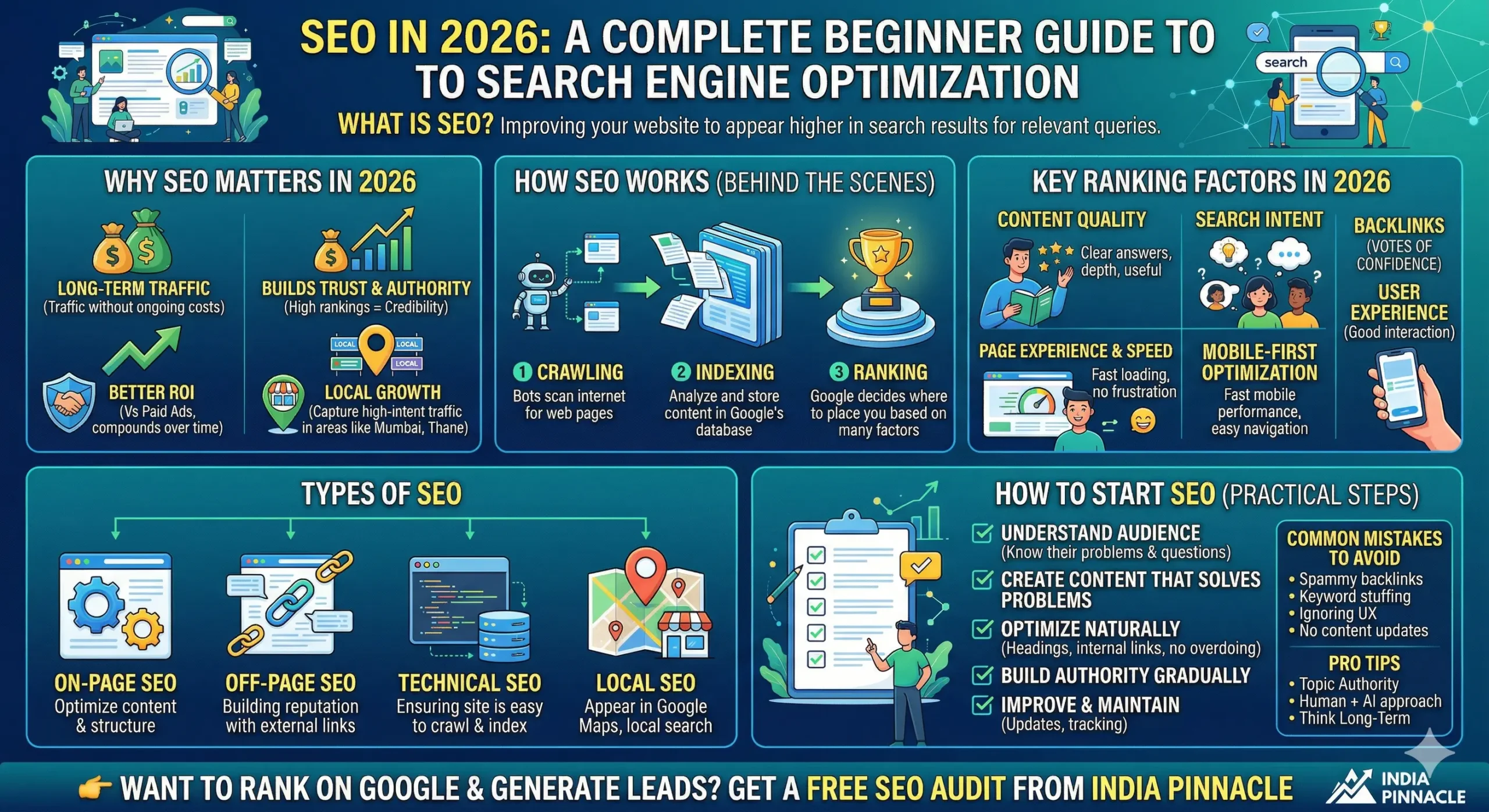
If you’re trying to understand SEO, one of the most important things to grasp is that it is not a single activity. SEO is a combination of multiple strategies working together to improve your website’s visibility on search engines.
Many beginners focus only on one aspect, such as keywords or backlinks, without realizing that SEO is a system. To build a strong online presence, you need to understand the different types of SEO and how they interact with each other.
In 2026, search engines evaluate websites holistically. This means your rankings depend not just on content, but also on authority, technical performance, and relevance to user location.
In this guide, we will break down the main types of SEO and explain how each one contributes to your overall strategy.
Quick Overview of Types of SEO
To understand the structure, here are the main types of SEO:
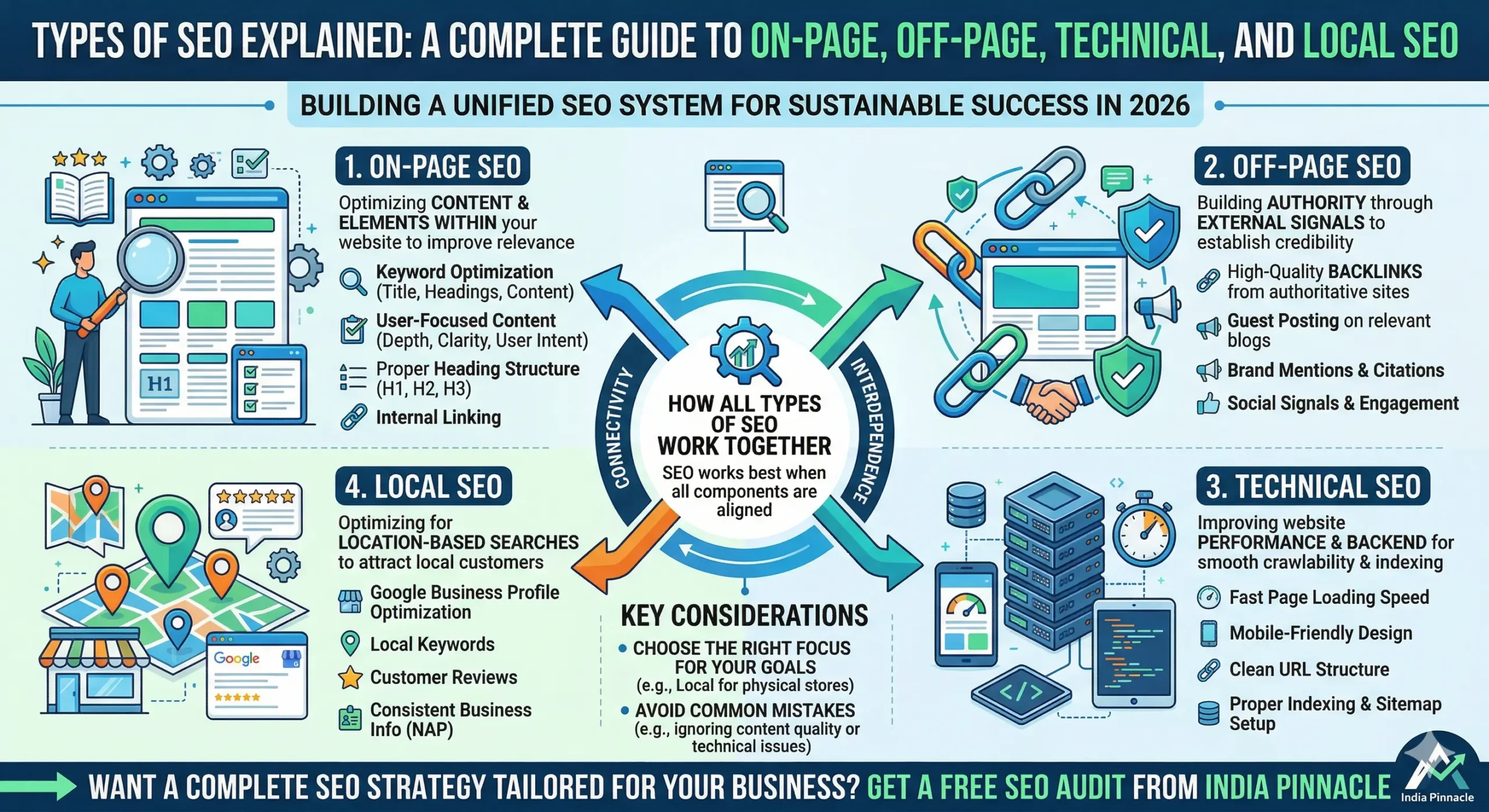
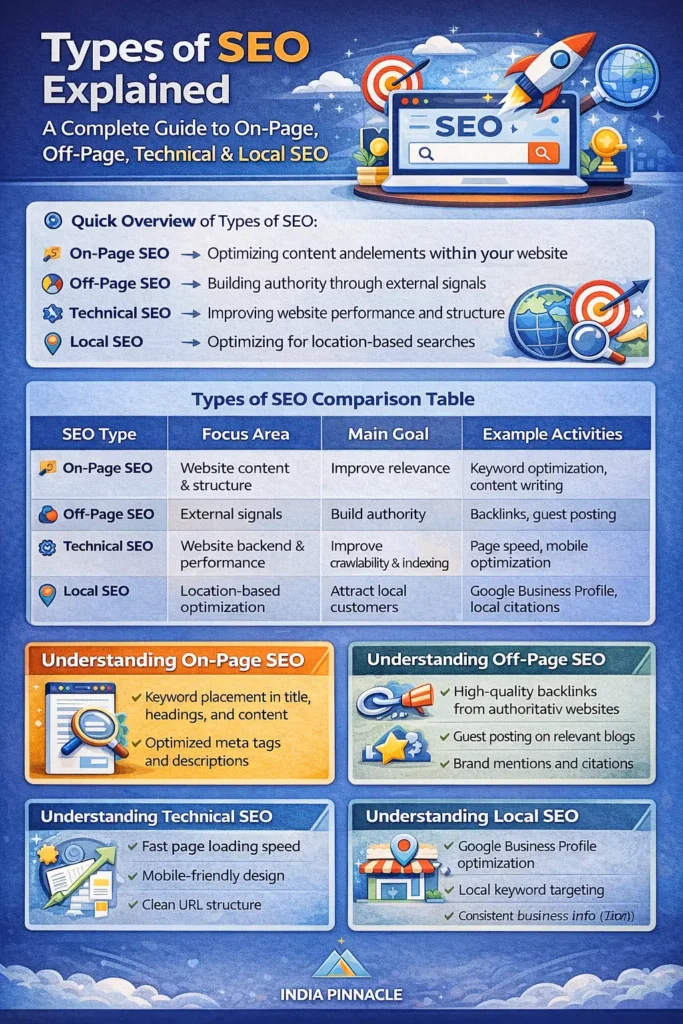
- On-Page SEO → Optimizing content and elements within your website
- Off-Page SEO → Building authority through external signals
- Technical SEO → Improving website performance and structure
- Local SEO → Optimizing for location-based searches
Each type plays a specific role, and ignoring any one of them can limit your growth.
| SEO Type | Focus Area | Main Goal | Example Activities |
| On-Page SEO | Website content & structure | Improve relevance | Keyword optimization, content writing |
| Off-Page SEO | External signals | Build authority | Backlinks, guest posting |
| Technical SEO | Website backend & performance | Improve crawlability & indexing | Page speed, mobile optimization |
| Local SEO | Location-based optimization | Attract local customers | Google Business Profile, local citations |
Understanding On-Page SEO in Depth
On-page SEO focuses on everything that exists within your website. It is the foundation of your SEO strategy because it directly controls how your content is presented to both users and search engines.
When you optimize a page, you are essentially making it easier for search engines to understand what your content is about. This includes using the right keywords, structuring your content properly, and ensuring clarity.
However, modern on-page SEO goes beyond technical placement. It involves creating content that aligns with user intent. If a user lands on your page and finds exactly what they are looking for, it sends strong signals to search engines.
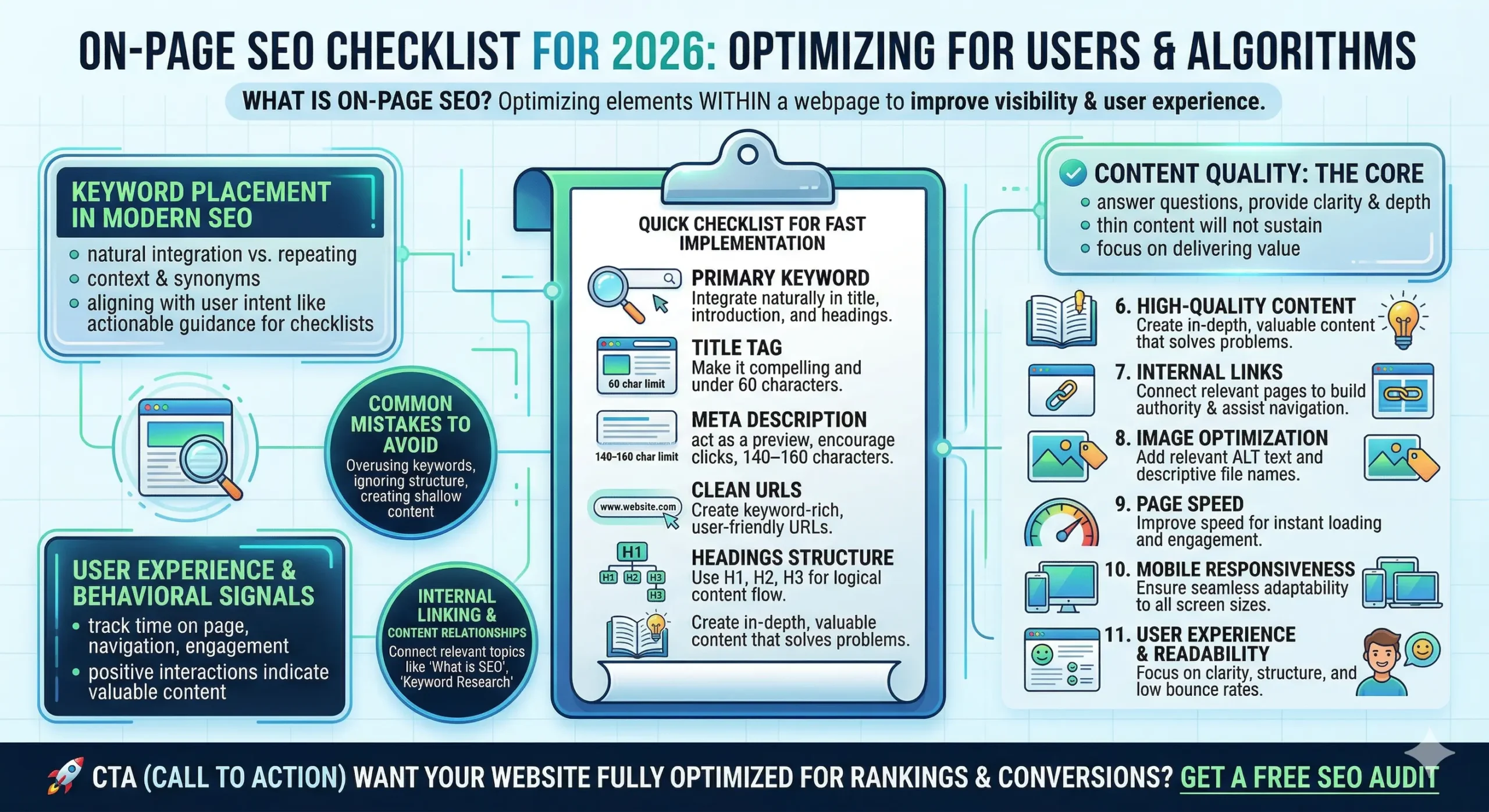
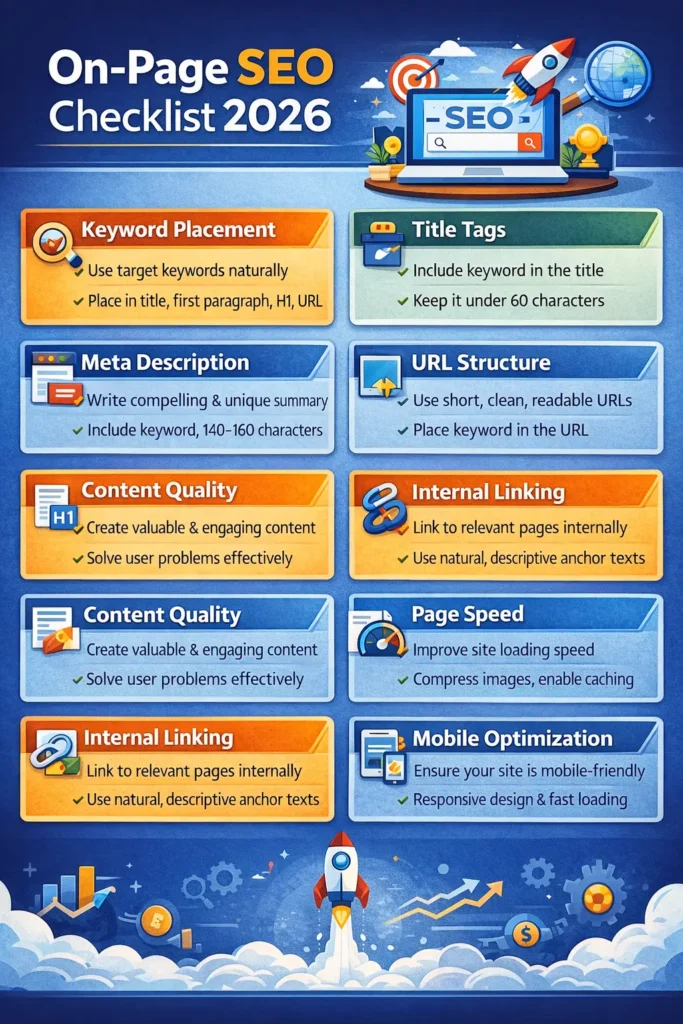
This is why your on-page SEO checklist plays a critical role. It ensures that every page you create is optimised not just for ranking, but for usability and engagement.
Key Elements of On-Page SEO
- Keyword placement in title, headings, and content
- Optimized meta tags and descriptions
- Proper heading structure (H1, H2, H3)
- Internal linking between pages
- High-quality, user-focused content
Understanding Off-Page SEO and Authority Building
While on-page SEO builds your foundation, off-page SEO determines your authority.
Off-page SEO refers to actions taken outside your website to improve its credibility. The most important component of off-page SEO is backlinks — links from other websites pointing to your content.
Search engines treat backlinks as votes of confidence. When reputable websites link to you, it signals that your content is valuable and trustworthy.
However, not all backlinks are equal. Quality matters far more than quantity. A few strong links from authoritative websites can have a much greater impact than hundreds of low-quality links.
Off-page SEO also includes brand mentions, social signals, and online reputation. Together, these factors help establish your website as an authority in your niche.
Key Elements of Off-Page SEO
- High-quality backlinks from authoritative websites
- Guest posting on relevant blogs
- Brand mentions and citations
- Social signals and engagement
Understanding Technical SEO and Website Performance
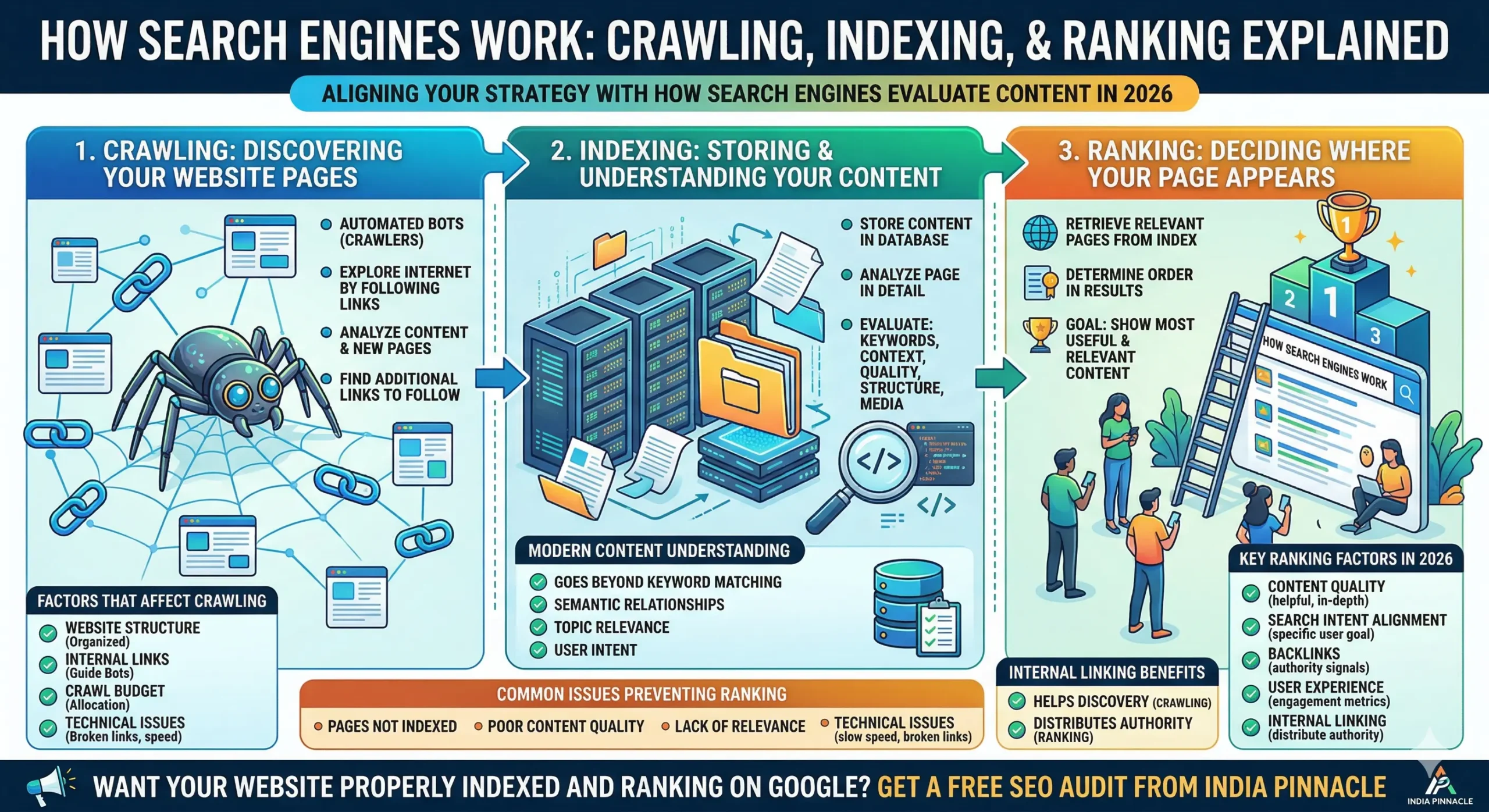
Technical SEO focuses on the backend aspects of your website that affect how search engines crawl and index your content.
Even if your content is excellent, technical issues can prevent it from ranking. For example, if your pages load slowly, are not mobile-friendly, or have indexing issues, search engines may struggle to evaluate them properly.
Technical SEO ensures that your website is accessible, fast, and easy to navigate. It includes elements such as:
- Website speed optimization
- Mobile responsiveness
- Proper URL structure
- Fixing crawl errors
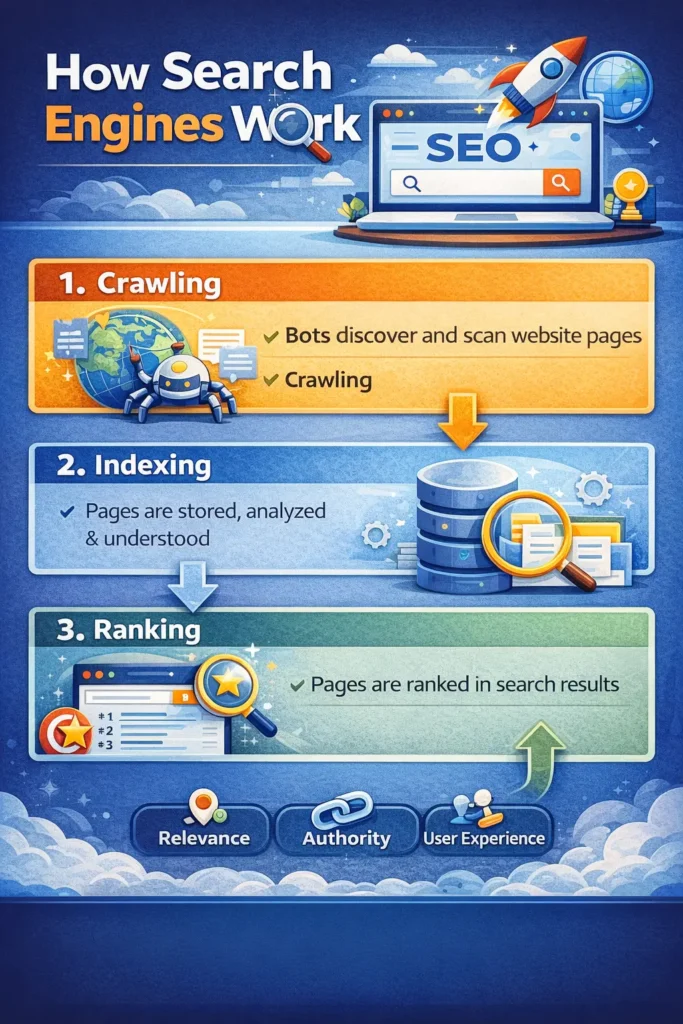
This connects directly to how search engines work, especially the crawling and indexing stages.
Think of technical SEO as the infrastructure that supports your content. Without it, even the best strategies can fail.
Key Elements of Technical SEO
- Fast page loading speed
- Mobile-friendly design
- Clean URL structure
- Proper indexing and sitemap setup
Understanding Local SEO and Geographic Relevance
Local SEO is essential for businesses that target specific locations.
When users search for services near them, search engines prioritize results that are geographically relevant. This is where local SEO comes into play.
It involves optimizing your website and online presence so that you appear in local search results and Google Maps.
Key elements of local SEO include:
- Google Business Profile optimization
- Local keywords
- Customer reviews
- Consistent business information (NAP)
For businesses in India, local SEO can drive highly targeted traffic with strong intent. Users searching for services in their area are often ready to take action.
How All Types of SEO Work Together
One of the biggest mistakes people make is treating these types of SEO as separate strategies.
In reality, they are interconnected.
Your on-page SEO ensures your content is clear and relevant. Your technical SEO ensures it can be accessed and understood. Your off-page SEO builds authority, and your local SEO ensures relevance to specific audiences.
If one of these areas is weak, it affects your overall performance.
For example, strong content without backlinks may struggle to rank. Similarly, high authority without proper on-page optimization may fail to convert visitors.
SEO works best when all components are aligned.
Choosing the Right SEO Focus for Your Website
The importance of each SEO type depends on your goals.
If you are just starting, focusing on on-page SEO and content creation is essential. This builds your foundation.
As your website grows, off-page SEO becomes more important to increase authority.
Technical SEO should always be maintained to ensure smooth performance, while local SEO is critical if your business depends on location-based customers.
Understanding where to focus allows you to allocate your efforts effectively.
Common Mistakes When Understanding SEO Types
Many beginners misunderstand how these SEO types function.
Some focus only on backlinks and ignore content quality. Others create content without optimizing it properly. Technical issues are often overlooked, which can prevent pages from being indexed.
Another common mistake is ignoring local SEO, especially for businesses that rely on local customers.
Avoiding these mistakes ensures a more balanced and effective strategy.
Conclusion
Understanding the different types of SEO is essential for building a successful online presence.
SEO is not about choosing one strategy over another. It is about combining on-page, off-page, technical, and local SEO into a unified approach.
When these elements work together, they create a strong foundation that supports long-term growth.
Instead of focusing on isolated tactics, focus on building a complete system. This is what leads to consistent rankings and sustainable success.
FAQs
What are the main types of SEO?
On-page SEO, off-page SEO, technical SEO, and local SEO are the main types.
Which type of SEO is most important?
On-page SEO is the foundation, but all types are important for overall performance.
Can I rank using only one type of SEO?
It is possible in low competition, but long-term success requires all types working together.